

Shiv Shakti Team
Digital Experts
How LangChain AI Agents Help Businesses Complete Tasks Automatically?

Most business teams do not lose time because of one big problem. They lose time because of hundreds of small, repetitive steps that happen every day. Someone checks a website inquiry, copies the details into a spreadsheet, updates the CRM, replies to a customer email, searches a document, creates a report, and then sends an update to the team. Each task looks simple, but together they slow down operations.
A LangChain AI Agent gives businesses a practical way to reduce that manual workload. Instead of only answering questions like a normal chatbot, an AI agent can understand a goal, decide what action is needed, use business tools, read company data, and complete multi-step work with the right level of human control.
For companies that want to improve productivity without adding unnecessary complexity, LangChain agents can become a strong foundation for AI task automation, workflow automation with AI, and custom AI agents designed around real business processes.
What is a LangChain AI Agent?
A LangChain AI Agent is an AI-powered system that can understand a business request, plan the next steps, use tools or APIs, access company data, and help complete a task with minimal manual effort. It is built using LangChain components such as language models, prompts, tools, retrieval systems, and structured workflows.
The easiest way to understand the difference is this: a chatbot mainly gives answers, while an AI agent can take action. A chatbot may answer, Here is how you update a CRM record.†A LangChain AI Agent can understand the request, check the required information, call the CRM API, prepare the update, and ask for approval before saving the change.
This makes LangChain agents useful for businesses that need more than basic question-answering. They can support customer service, sales, reporting, document processing, operations, marketing, and internal knowledge workflows.
- Chatbot: responds to users' queries using the given information.
- AI agent: understands the goal, selects the appropriate tool, gets the necessary data, executes the actions, and assists the process in the business.
- Human-in-the-loop AI agent: automatically executes low-risk actions and requests permission for high-risk actions like payment, deletion of records, legal correspondence, or sending an email.
How LangChain AI Agents Work?
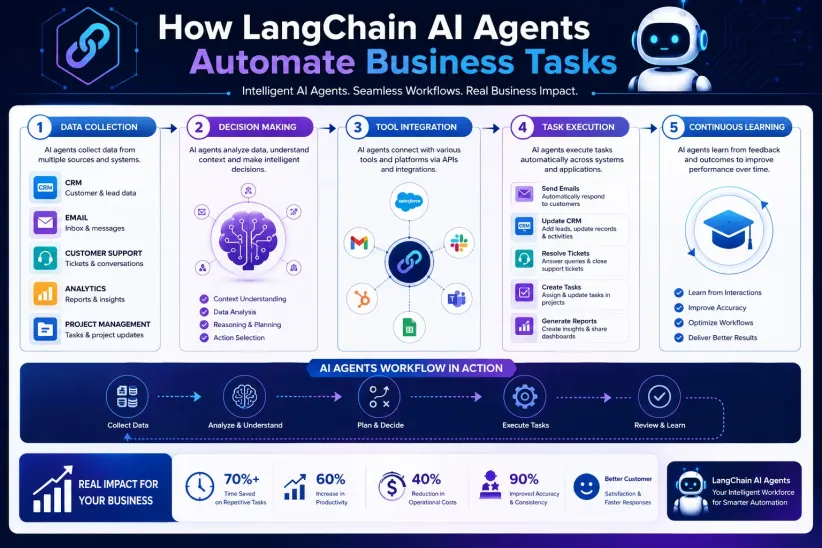
A LangChain AI Agent works by combining reasoning with action. It does not simply generate text. It receives a request, understands the goal, chooses the right tools, processes results, and responds with an answer or a completed task.
- The user gives a task or request in natural language.
- The agent understands the goal and required outcome.
- The agent decides which tool, API, document, database, CRM, or search source is needed.
- The agent calls the required tool or retrieves the required information.
- The agent processes the result and decides the next step.
- The agent gives a final answer, prepares an action, or completes the workflow.
- For sensitive steps, the agent asks for human approval before continuing.
For example, a sales manager may ask: “Find new leads from todays form submissions, check if they already exist in CRM, classify them by priority, and draft follow-up emails.â€
A well-designed LangChain AI Agent can collect the form submissions, compare them with existing CRM records, classify each lead based on company rules, draft personalized follow-up emails, and notify the sales team. If the company wants safety control, the agent can stop before sending emails and ask a sales person to approve the drafts.
This is where the business value becomes clear. The agent does not replace the sales team. It removes the repetitive preparation work so the team can focus on conversations, relationships, and closing opportunities.
A well-designed LangChain AI Agent can collect the form submissions, compare them with existing CRM records, classify each lead based on company rules, draft personalized follow-up emails, and notify the sales team. If the company wants safety control, the agent can stop before sending emails and ask a sales person to approve the drafts.
This is where the business value becomes clear. The agent does not replace the sales team. It removes the repetitive preparation work so the team can focus on conversations, relationships, and closing opportunities.
Why LangChain is Useful for Building AI Agents?
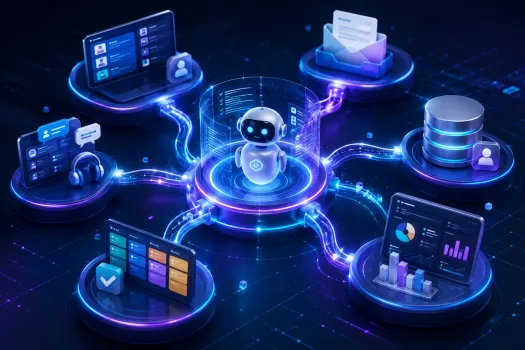
LangChain is useful because it gives developers the building blocks needed to create business-specific AI systems instead of one-size-fits-all chatbots. A company can connect language models with tools, APIs, documents, databases, and workflows that match its actual operations.
Model flexibility is one major advantage. Businesses are not limited to a single model provider. Depending on budget, performance, privacy, and use case, developers can design agents using different LLMs and switch or combine them as requirements change.
Tool calling is another key part of LangChain agent development. Tools allow the agent to interact with outside systems such as CRMs, calendars, email platforms, databases, analytics dashboards, ticketing systems, and internal APIs. This is what turns an AI assistant from a passive answer generator into a task-focused business automation layer.
LangChain also supports retrieval-augmented generation, commonly known as RAG. A RAG AI agent can search company documents, policies, PDFs, FAQs, SOPs, product manuals, contracts, and knowledge bases before answering. This helps the agent provide more relevant answers based on company-specific information rather than relying only on general model knowledge.
For more advanced projects, LangGraph can be used to manage complex, long-running, stateful agent workflows. LangSmith can help teams trace, debug, evaluate, monitor, and improve AI applications after development. Together, LangChain, LangGraph, and LangSmith give businesses a clearer path from prototype to production-ready AI automation solutions.
Business Tasks LangChain AI Agents Can Automate
A LangChain AI Agent can be designed for many different business processes. The best use cases are usually tasks that involve repeated decisions, multiple tools, documents, customer communication, or manual data movement.
1. Customer Support Automation
AI agents can answer customer questions, check order details, summarize support tickets, suggest replies, and escalate complex cases to human support agents. This improves response speed while keeping human teams involved where judgment is required.
2. Lead Management
LangChain agents can capture leads, qualify them, enrich missing details, update CRM records, and prepare follow-up messages. Sales teams can use this to reduce manual CRM work and respond faster to high-intent prospects.
3. Document Processing
Businesses often store important knowledge inside PDFs, contracts, invoices, reports, proposals, manuals, and policy documents. A RAG AI agent can search these documents and extract useful information in a structured way.
4. Emails & Workflow of Communication
An AI agent can assist in summarizing lengthy email conversations, drafting responses, sending reminders, responding to customer queries and organizing communication workflows. Important external emails need to have human approval before sending.
5. Sales & CRM Automation
LangChain agents can help in preparing meeting summaries, deal status update, identifying top priority prospects, preparing sales insights and following up. It will enable the sales team to focus on sales rather than administrative activities.
6. E-commerce Operations
AI agents can be used by online stores to respond to customer queries, track orders, prepare sales reports, return management and notifications. They can also help in cart abandonment and other inventory updates.
7. HR and Recruiting
HR departments may use LangChain AI Agents to filter resumes, summarize candidate profiles, book interviews, answer questions about policies, and create onboarding checklists.
8. Finance and Administrative Duties
Agents may extract data from invoices, detect missing information, structure expense data, and generate reports. Yet, agents need approval for payments, financial decisions, or other sensitive issues.
9. Internal Knowledge Assistant
Employees spend much time searching information from various sources such as documents, chats, drives, and SOPs. An internal knowledge AI Agent will help them get the correct information from their company-approved knowledge bases.
10. AI-Powered Reporting
A LangChain AI Agent can collect information from multiple tools and prepare daily, weekly, or monthly reports. This is useful for operations, sales, marketing, finance, and management teams that need quick visibility without manual reporting effort.
Real-World Example: From Manual Process to AI Agent Automation
Imagine there is a small service business where they get queries every day via their website. In the manual process, a team member looks at the form answer, enters data into Google Sheets, checks the CRM, sends an email, lets the sales team know about it, and schedules a reminder for follow-up.
This process might take just several minutes for one query, but as the amount of queries increases, the process gets repetitive and inconsistent, and thus is easy to procrastinate.
Using the LangChain AI Agent, the entire process could be automated again. The agent will receive the inquiry, check if the lead is present in the CRM system, classify the lead by type of service required and importance, save the information, write an answer to the lead, inform the sales team, and schedule the follow-up task. The answer can be approved if needed.
The result is not only faster work. It also creates a more reliable customer experience. Leads are not missed, records stay updated, and sales teams receive better context before starting a conversation. Do you need help contact us? We are here to help you in a better way.
LangChain AI Agent vs Traditional Automation
Feature | Traditional Automation | LangChain AI Agent |
Task handling | Works well for fixed, rule-based tasks. | Handles flexible tasks that may need reasoning and context. |
Decision-making | Follows predefined conditions. | Can decide next steps based on user intent and available data. |
Data understanding | Works best with structured inputs. | Can work with structured and unstructured data such as text, documents, and messages. |
Flexibility | Changes often require manual workflow updates. | Can adapt better to natural language instructions and different task paths. |
Natural language input | Usually limited or unavailable. | Can understand business requests written in normal language. |
Document understanding | Requires fixed extraction rules. | Can use RAG to search and understand company documents. |
Best use case | Simple repeated workflows. | Workflows that need context, tools, reasoning, and data understanding. |
Traditional automation is still valuable. It is a good choice for predictable workflows such as moving data from one app to another or sending a fixed notification after a trigger. A LangChain AI Agent is more suitable when the task involves natural language, documents, multiple possible steps, or decision-making based on context.
Where LangGraph Fits in Advanced AI Agent Workflows?
Simple agents can handle straightforward tasks, but real business processes often need more control. A customer onboarding workflow, for example, may include document collection, identity checks, CRM updates, email drafts, manager approval, and follow-up reminders. These steps may not happen in one short conversation.
LangGraph helps when an AI workflow needs structure, memory of state, retries, human approval, and long-running execution. It is useful for building agent workflows where the business needs predictable control over what happens next.
- Multi-step agent workflows that move through several business actions.
- Long-running processes that may pause and continue later.
- State management so the workflow remembers progress.
- Human approval steps before sensitive actions.
- Multi-agent systems where different agents handle different responsibilities.
- Reliable workflow control for production use cases.
In business terms, LangGraph helps make advanced AI agents more controlled and dependable. It gives teams a better way to design agent behavior instead of letting every step happen in an uncontrolled sequence.
Why LangSmith Matters for Production AI Agents?
Building an AI agent is only the first part of the work. Once the agent is used by employees or customers, the business needs visibility. Teams need to know what the agent did, which tools it used, where it failed, how much it cost, and whether the output was useful.
LangSmith helps teams trace and monitor AI applications so developers and business stakeholders can improve reliability over time. This is important because AI agents often involve multiple steps, tool calls, documents, prompts, and model responses.
- Trace agent steps to understand how a response or action was produced.
- Debug failed tool calls and unexpected results.
- Monitor quality, cost, and latency in production workflows.
- Evaluate responses using test datasets and real examples.
- Improve prompts, workflows, and tool behavior based on evidence.
For a company website, this point is important: serious AI automation should be measurable. LangSmith helps move AI agent development away from guesswork and toward continuous improvement.
Benefits of LangChain AI Agents for Businesses
Saves Time on Repetitive Work
LangChain AI Agents can reduce time spent on routine tasks such as checking records, summarizing information, preparing drafts, and moving data between tools.
Reduces Manual Errors
Manual copy-paste work often creates mistakes. AI agents can follow structured steps, validate inputs, and keep systems more consistent when designed properly.
Improves Customer Response Speed
Faster replies can improve customer experience. Agents can prepare answers, retrieve context, and support teams with better information before they respond.
Connects Multiple Business Tools
A LangChain AI Agent can work across CRMs, email tools, spreadsheets, databases, calendars, ticketing systems, and internal software through APIs and integrations.
Helps Teams Focus on High-Value Work
When routine preparation work is automated, employees can spend more time on strategy, customer relationships, sales conversations, and decision-making.
Supports Scalable Business Growth
As work volume increases, AI agents can help businesses handle more processes without increasing manual workload at the same pace.
Makes Internal Knowledge Easier to Access
With RAG, employees can search company knowledge through natural language instead of manually browsing long documents or scattered folders.
Enables Smarter AI Workflow Automation
LangChain agents can combine reasoning, business data, and tool usage, which makes them useful for workflows that are too flexible for basic automation tools.
Industries That Can Use LangChain AI Agents
LangChain AI Agents can be adapted to many industries because they are designed around workflows, tools, and data. The use case should always be designed with the right safety controls, especially in regulated industries.
- Healthcare: summarize appointment notes, answer policy questions, and help staff find internal information. Medical decisions should always involve qualified professionals.
- Finance: organize reports, extract invoice data, detect missing information, and prepare summaries. Payments and financial decisions should require approval.
- Real estate: qualify property inquiries, answer listing questions, schedule visits, and summarize client preferences.
- E-commerce: support order tracking, customer questions, product recommendations, return requests, and sales reports.
- Education: answer student questions from course material, summarize resources, and support administrative workflows.
- Logistics: track shipment updates, summarize delivery issues, and notify teams about delays.
- SaaS: support onboarding, ticket triage, product documentation search, and customer success workflows.
- Marketing agencies: generate campaign reports, summarize performance data, manage lead workflows, and draft client updates.
- Legal operations: search internal documents, summarize case information, and prepare draft material. Legal review should remain mandatory.
- Manufacturing: answer SOP questions, summarize production reports, organize maintenance requests, and support quality documentation.
Important Things to Consider Before Building a LangChain AI Agent
A successful AI agent starts with a clear business process. Companies should not build an agent only because the technology is popular. They should first identify the workflow where automation can create measurable value.
- What exact task should the agent automate?
- Which tools, APIs, CRMs, databases, or business systems should it connect with?
- What company data should the agent access?
- Should the agent use RAG for document-based answers?
- Which actions need human approval before completion?
- How will the agent be tested before release?
- How will accuracy, quality, cost, and performance be monitored?
- How will data privacy, access control, and security be handled?
These questions help turn an idea into a practical AI automation solution. The best LangChain development services usually begin with workflow discovery, not code.
Why Businesses Should Build Custom LangChain AI Agents?
Every business has different tools, data, approval rules, customer expectations, and internal processes. A generic AI assistant may answer simple questions, but it usually cannot understand the full workflow of a specific company.
A custom LangChain AI Agent can be designed around the exact way a business works. It can connect with the companys CRM, read approved documents, follow internal rules, use preferred communication channels, and include human approval where needed.
This is why custom AI agents are becoming valuable for companies that want practical automation rather than experimental AI demos. The goal is not to add AI everywhere. The goal is to automate the right tasks in a safe, measurable, and business-friendly way.
If your business spends hours on repetitive tasks, customer queries, CRM updates, document processing, reporting, or internal workflows, a custom LangChain AI Agent can help automate those processes and improve operational efficiency.
Conclusion
LangChain AI Agents are more than just chatbots – they are complex systems which can understand goals, interact with other tools, interact with business data, and assist in automation of tasks. LangChain can provide an excellent framework for any business looking to save time, automate operations and decrease manual workloads.
LangGraph will allow businesses to create more advanced workflows which involve state, long-running processes, and human approval steps. LangSmith will allow businesses to monitor, evaluate, and improve their AI agents after they have been deployed.
With the correct LangChain AI Agent, businesses will gain the ability to respond faster and be consistent in what they do. Moreover, LangChain can be used as an automation tool to make certain business-related tasks more efficient, but never as a substitute for human expertise.
Interested in creating a custom LangChain AI Agent? Let us help you.
Read More Blogs
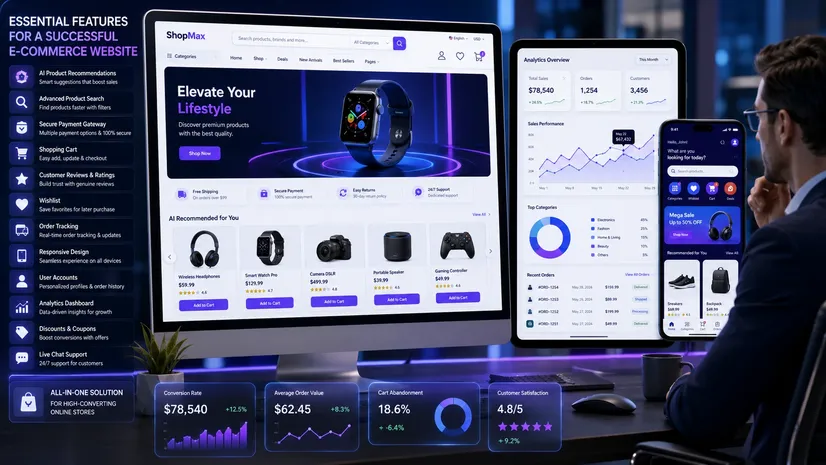
Essential Features for Modern E-Commerce Websites?
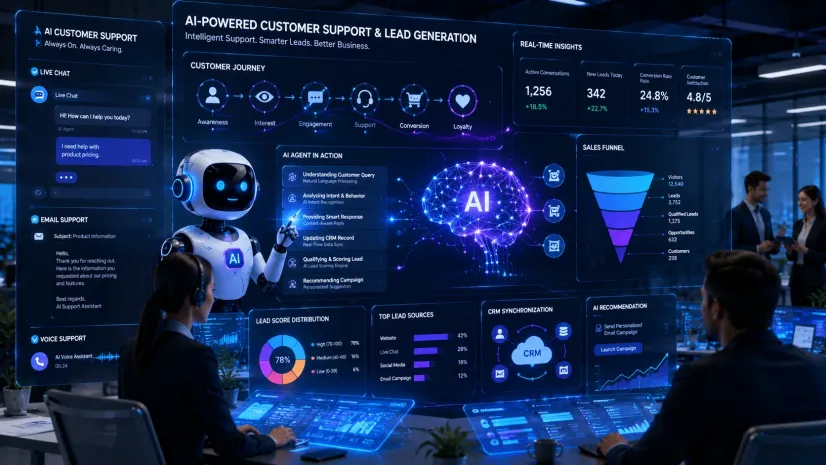
How AI Can Improve Customer Support and Lead Generation?
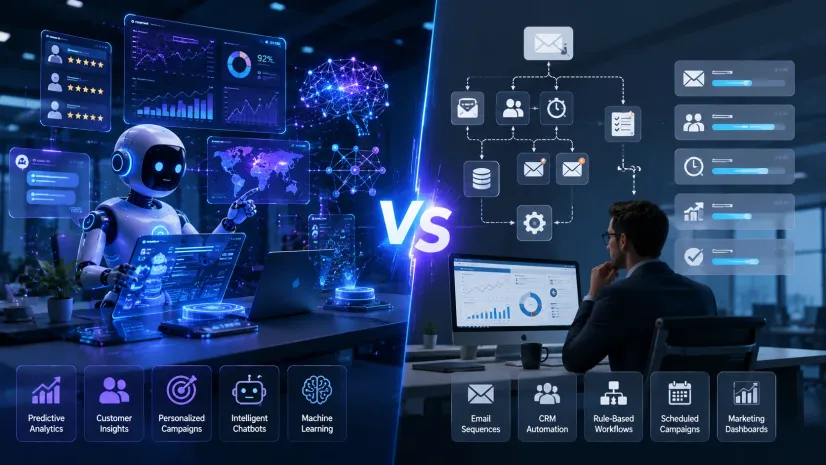
AI Agents vs Traditional Marketing Automation: Which One Is Better?
Frequently Asked Questions
Q.1 What is a LangChain AI Agent?
A LangChain AI Agent is a form of AI which is capable of comprehending tasks, using tools and accessing data, and completing business workflows. Such an AI agent can be created to integrate with CRMs, documents, APIs, email systems, databases, and other business tools.
Q.2 In what way is a LangChain AI Agent different from a chatbot?
The chatbot only responds to questions. A LangChain AI agent is capable of taking actions, using tools, accessing corporate data, updating systems, drafting, triggering workflows, and completing business processes.
Q.3 Can LangChain AI Agents automate business processes?
Yes. LangChain AI agents can automate business processes like customer service, lead generation, CRM updates, document searching, email drafting, report generation, and internal knowledge flows. Sensitive actions require human oversight.
Q.4 Is LangChain appropriate for building custom AI agents?
Yes. LangChain is a helpful platform for developing custom AI agents due to tool calling, flexible models, retrieval-based responses, APIs integration, and business processes automation capabilities.
Q.5 Does every business need LangGraph and LangSmith along with LangChain?
Not necessarily for straightforward use cases. Nevertheless, LangGraph is necessary for more complicated and stateful use cases, whereas LangSmith is useful for tracking, debugging, evaluation, and monitoring AI agents in production.
Shiv Shakti Softech
We are a team of passionate digital experts dedicated to helping businesses grow online through innovative web design, SEO, and marketing strategies.
Work with usNeed Expert Help?
Ready to leverage these strategies for your business? Let's talk about your project.
GET IN TOUCH