

Shiv Shakti Team
Digital Experts
Essential Features for Modern E-Commerce Websites
There have been significant changes in the e-commerce industry over the last few years. People are becoming more demanding about online shopping; they want smart and faster experiences. Having an online store simply won't be enough anymore to get ahead of competition in the online world. Businesses will need to incorporate e-commerce website features that can positively impact the overall customer experience.
An advanced e-commerce website isn't only about showcasing products to customers; it will also help your customers search for their products quickly, provide secured transactions, give personalized suggestions, and ensure that customers get an enjoyable shopping experience on all platforms.
Recent studies show that there has been a rise in mobile commerce traffic, and the percentage of online shoppers who are looking for AI-based recommendations, fast loading time, and frictionless checkout process has been rising.
In this guide, we will talk about the essential e-commerce website features that businesses need to incorporate into their website designs to create a great customer experience.
Why Do Modern E-Commerce Websites Need Advanced Features?
However, consumer demands change along with technological progress. Online consumers nowadays assess websites not only in terms of merchandise and prices but also in regard to conveniences and speed and even more.
An effective approach to e-commerce website development is one that concentrates both on good design and functionality. Companies that consider the usability aspect tend to have a higher number of customers, more conversions, and reduced bounce rates.
Also, modern websites include elements such as AI, automation, and analytics to learn the habits of their customers.
Better User Experience Increases Conversions
One of the key benefits associated with e-commerce user experience investment is the ability to increase the conversion rate.
If it is easy for customers to browse through products, compare their choices, and finally make a purchase, they will become loyal users of the website.
The user experience should include:
- Website navigation that is easy
- Website pages that load quickly
- Compatibility of the website with mobile devices
- Products arranged in a simple way
- Easy checkout procedures
- Safe payment mechanisms
Fast-Loading Websites Improve Customer Satisfaction
Website speed is extremely important for online commerce.
The consumer expects web pages to open in seconds. Websites with slow page opening tend to experience abandoned baskets and loss of revenue.
There are many advantages of having a fast loading website:
- Lower bounce rates
- Higher search engine ranking
- Enhanced shopping experience
- Customer retention
- Increased conversion rate
Improving images, using advanced hosting services, implementing caching and avoiding unnecessary scripts are ways to improve website speed.
Essential Features Every Modern E-Commerce Website Should Have
Building a successful online store requires more than attractive visuals. Businesses should include practical features that simplify shopping while increasing customer confidence.
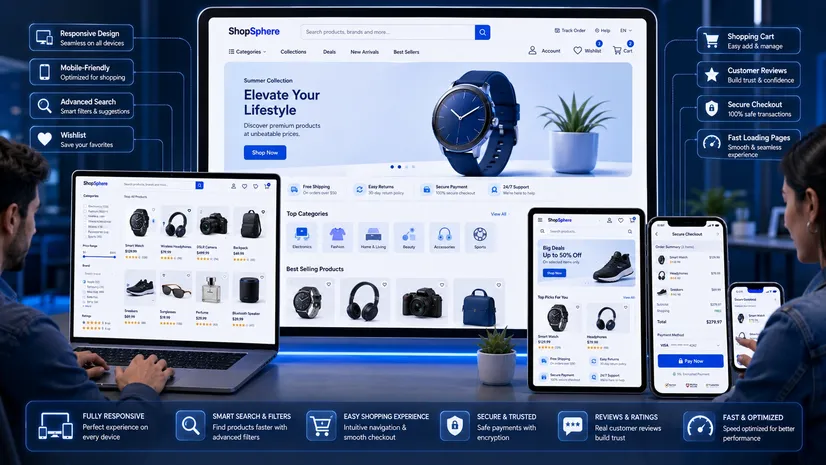
Mobile-Friendly Online Store
Nowadays, most users shop online through the use of smartphones and tablets.
An online store that is optimized for mobile browsing will adapt to different screen sizes, ensuring navigation is seamless on any device.
A responsive design allows companies to:
- Attract more customers
- Provide better mobile shopping experience
- Convert more customers
- Avoid cart abandonment
Also, search engines give priority to mobile-friendly websites, which makes it a very important part of a good e-commerce website design.
Responsive E-Commerce Design
A responsive website design means all pages fit perfectly on your desktop, laptop, tablet, and even mobile devices.
Responsive sites have:
- Flexible product design
- Optimized imagery
- Readability typography
- Touch-based navigation
- Unified user experience
Consumers love websites that work well no matter which device they access the site from.
Secure Payment Gateway and Multiple Payment Options
Security remains one of the most important concerns for online shoppers.
Customers expect businesses to protect their personal and financial information throughout the purchasing process.
Modern online stores should offer:
- Credit and debit card payments
- Digital wallets
- UPI payments
- Net banking
- Buy Now Pay Later (BNPL) options
- International payment gateways
Providing multi-payment options gives customers flexibility while increasing completed transactions.
Equally important is website security, including SSL encryption, secure payment processing, and compliance with industry security standards to build customer trust.
Smart Features That Enhance the Shopping Experience
Today's customers appreciate websites that make shopping faster, easier, and more personalized.
Intelligent technology helps businesses deliver customized experiences while improving operational efficiency.
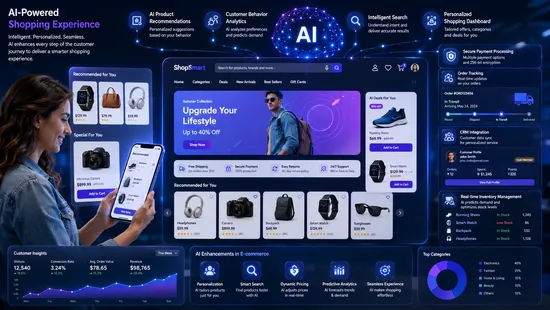
AI Product Recommendations
AI has proven to be one of the most useful tools used in e-commerce today.
With browsing history, purchasing habits, and consumer preferences, the AI recommends items that are most relevant to each specific shopper.
Some advantages include:
- Individualized shopping experience
- Higher average order values
- Effective product discovery
- Enhanced customer engagement
- Conversion rate improvements
Most top online retailers make use of AI recommendations to facilitate cross-selling and up-selling.
Customer Reviews and Ratings
Trust is an important part of decision-making during online shopping.
Showing reviews and ratings can help people assess the quality of products before buying.
A good review can act as social proof and instill trust in the brand.
It would be wise for companies to promote their customers to give feedback about the products.
Advanced Search and Product Filters
As product catalogs grow, customers need efficient ways to find exactly what they're looking for.
An advanced search system combined with smart filters allows shoppers to browse products based on:
- Price
- Brand
- Category
- Color
- Size
- Availability
- Customer ratings
These features reduce frustration and improve the overall shopping experience by helping users quickly locate relevant products.
Features That Increase Sales and Customer Retention
Driving traffic to your online store is only half the battle. The real success of an online business depends on converting visitors into customers and encouraging them to return for future purchases. The right e-commerce website features help reduce cart abandonment, improve customer satisfaction, and build long-term loyalty.
Shopping Cart Features
An effective shopping cart is one of the key components of any successful e-commerce business. Customers want an easy and clear way to buy without any additional steps.
Shopping cart must have the following functions:
- Easy way to add items to the cart
- Adjust item quantity
- Save cart for future
- Calculate shipping rates prior to the payment
- Automatic taxation
- Discounts and coupon codes
- Guest checkout
The more effective your shopping cart system is, the higher conversion rate you can get.
Wishlist Functionality
All customers are not in the buying mood at all times. Some would like to keep the items for future purchases.
The introduction of wishlists provides the opportunity for the customer to do the following:
- Keep the list of their favorite items
- Compare products at a later stage
- Get alerts on any reduction in prices
- Share the wishlists with family and friends
Access their favorite items without going through search processes.
Order Tracking System
Consumers need full transparency once the order is placed.
Order tracking increases transparency as customers can track the progress of their shipment.
Advantages include:
- Less number of customer queries
- Enhanced customer trust
- A better consumer experience after purchase
- Higher levels of customer satisfaction
Order notification through emails/SMSes can be automated for better communication.
Latest E-Commerce Trends Shaping Online Stores
The e-commerce industry continues to evolve with new technologies that improve customer experiences and business efficiency. Staying updated with these innovations helps businesses remain competitive.
AI-Powered Personalization Is Becoming the Standard
Modern shoppers expect personalized experiences rather than generic product suggestions.
AI now helps businesses deliver:
- Personalized product recommendations
- Customized homepages
- Smart search results
- Dynamic pricing strategies
- Personalized email campaigns
This level of personalization improves customer engagement and encourages repeat purchases.
Voice Search and Visual Search Are Growing
Consumers increasingly use voice assistants and image-based search to discover products.
Modern e-commerce website development should consider features such as:
- Voice-enabled product search
- Image recognition for product discovery
- AI-powered search suggestions
- Predictive search results
These technologies simplify shopping while making online stores more accessible.
Sustainable and Transparent Shopping Experiences
Transparency and sustainability are important to todays consumers.
Successful e-commerce businesses currently emphasize:
- Eco-friendly packaging
- Carbon-neutral shipping methods
- Ethical sources
- Origins of products
- Certifications for sustainability
This is done to establish the reputation of a brand.
Best Practices for Building a Successful E-Commerce Website
Creating a successful online store requires more than adding features. Every feature should support a seamless customer journey.
Keep Navigation Simple
Customers should find products within a few clicks.
Use:
- Clear product categories
- Simple navigation menus
- Breadcrumb navigation
- Predictive search
- Easy-to-understand filters
Good navigation reduces frustration and increases browsing time.
Optimize for Search Engines
Even the best online store needs visibility.
Effective website design should include:
- SEO-friendly URLs
- Optimized product descriptions
- Fast-loading pages
- Mobile responsiveness
- Image optimization
- Internal linking
- Structured data (Schema Markup)
These practices help improve search engine rankings and attract organic traffic.
Build Customer Trust
Trust is essential for increasing online sales.
Businesses should display:
- SSL security certificates
- Secure payment icons
- Customer reviews
- Return and refund policies
- Contact information
- Privacy policy
- Frequently Asked Questions
A trustworthy website encourages visitors to complete purchases with confidence.
The Future of E-Commerce Is Intelligent Commerce
The biggest change in modern e-commerce trends is the transition from conventional e-commerce to intelligent commerce.
No longer does it provide the same experience to all customers; intelligent commerce uses artificial intelligence along with data on customers to offer customized shopping experiences.
For example,
- Recommending products using artificial intelligence on the basis of browsing history.
- Pricing the products dynamically on the basis of customer behavior.
- Updating inventories using artificial intelligence on the basis of demands.
- Offering personalized discounts to returning customers.
- Using artificial intelligence chatbots to answer any query instantly.
Intelligent commerce offers businesses many benefits.
Conclusion
However, creating an effective online store entails much more than good appearance. Companies have to ensure that they develop their own e-commerce website by incorporating appropriate features that would make the site more user-friendly, build trust, and ease the purchasing process.
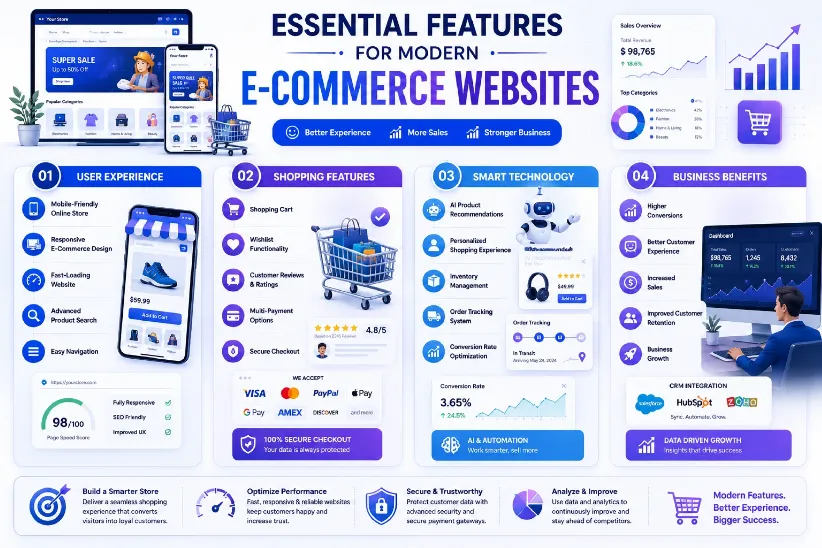
According to modern ecommerce trends such features as responsive design, security, AI-based product suggestions, advanced search functionality, shopping cart options, wish list option, and order tracking system help to enhance the shopping experience and ensure sustainable business growth.
Considering how customers' requirements change in time, it is important for companies to be innovative in terms of using effective e-commerce website strategies.
Read More Blogs
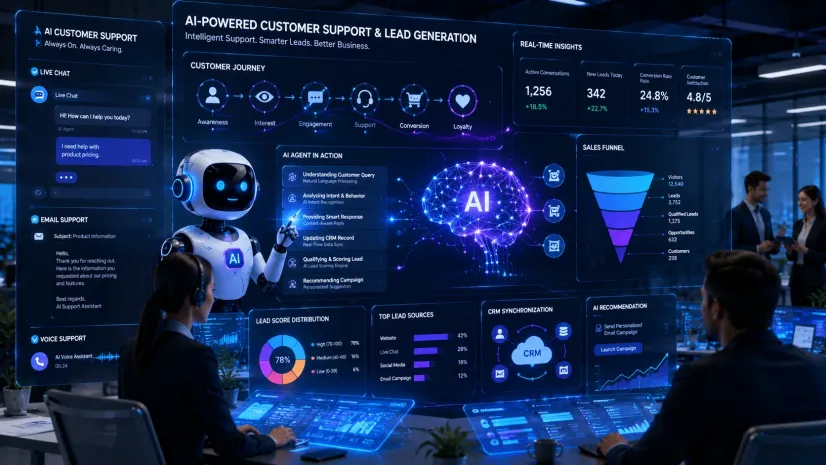
How AI Can Improve Customer Support and Lead Generation?

How LangChain AI Agents Help Businesses Complete Tasks Automatically?
How n8n Automation Helps Small Businesses Save Time and Automate Repetitive Tasks?
Frequently Asked Questions (FAQs)
Q.1 What are the key characteristics of a modern e-commerce website?
The key characteristics of a modern e-commerce website are responsive design, payment gateway security, quick page load, advanced searching, AI product recommendation, shopping cart options, customer review feature, wish list, and order tracking system.
Q.2 Why is mobile-friendly design crucial for e-commerce websites?
It allows customers to browse through and purchase products via their smartphones or tablet devices easily.
Q.3 How does AI product recommendation help boost online sales?
AI recommends relevant products based on the customer’s behavior and shopping habits.
Q.4 Why is website security critical to online retail websites?
The significance of website security lies in customer information protection, transaction protection, creating confidence, and minimizing cybersecurity risks, making customers more secure while buying online.
Q.5 How can companies enhance their conversion rate optimization of an e-commerce website?
Companies can optimize their conversion rates by providing high-speed loading web pages, easy navigation, secure checkouts, payment flexibility, customer reviews, AI-powered customization, and simplicity of the buying process.
Shiv Shakti Softech
We are a team of passionate digital experts dedicated to helping businesses grow online through innovative web design, SEO, and marketing strategies.
Work with usNeed Expert Help?
Ready to leverage these strategies for your business? Let's talk about your project.
GET IN TOUCH